

Some of us were handed a church history with the awkward pages quietly torn out.
For a while after 1844, the believers who became our founders thought the door of salvation had closed on the rest of the world. Ellen White admitted it in 1883: “For a time after the disappointment in 1844, I did hold, in common with the advent body, that the door of mercy was then forever closed to the world.” By the early 1850s they were preaching an open door.
Many pioneers also rejected the Trinity. In 1846 James White called it “the old unscriptural trinitarian creed.” By 1931 our published statement of beliefs named the Trinity outright.
Some pages hurt to read. In September 1943, Lucy Byard, a Black Adventist with liver cancer, came to the Washington Sanitarium, an Adventist hospital in Takoma Park, Maryland. Once staff learned she was Black, she was denied regular care. She died at Freedmen’s Hospital on October 30. Black members organized in protest, and in April 1944 church leaders voted for regional conferences run by Black officers.
Telling these stories does the church a favour. They show God leading people who got things wrong and kept learning. They also spare young Adventists from finding the hard parts alone online and wondering what else was hidden.
Jesus said, “And ye shall know the truth, and the truth shall make you free” (John 8:32). He never needed a spotless institution to protect. He called Himself the truth (John 14:6), and we belong to Him, all of our history included.
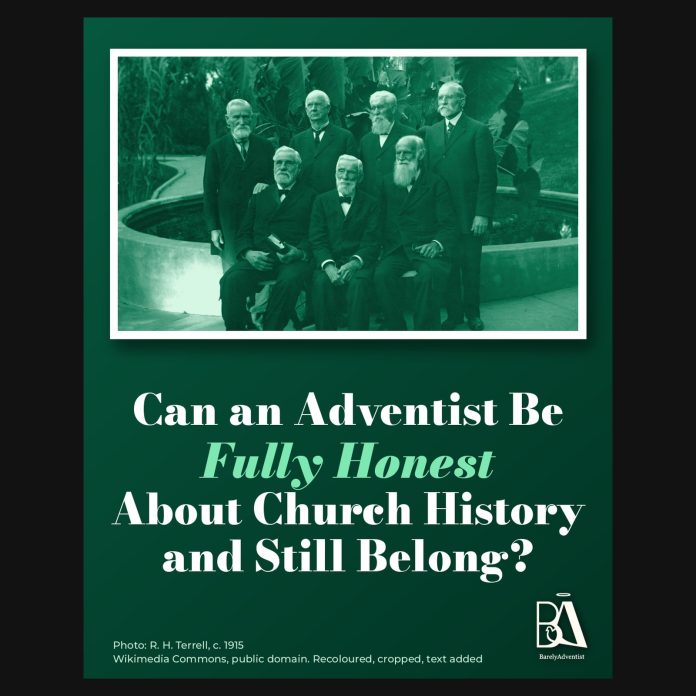
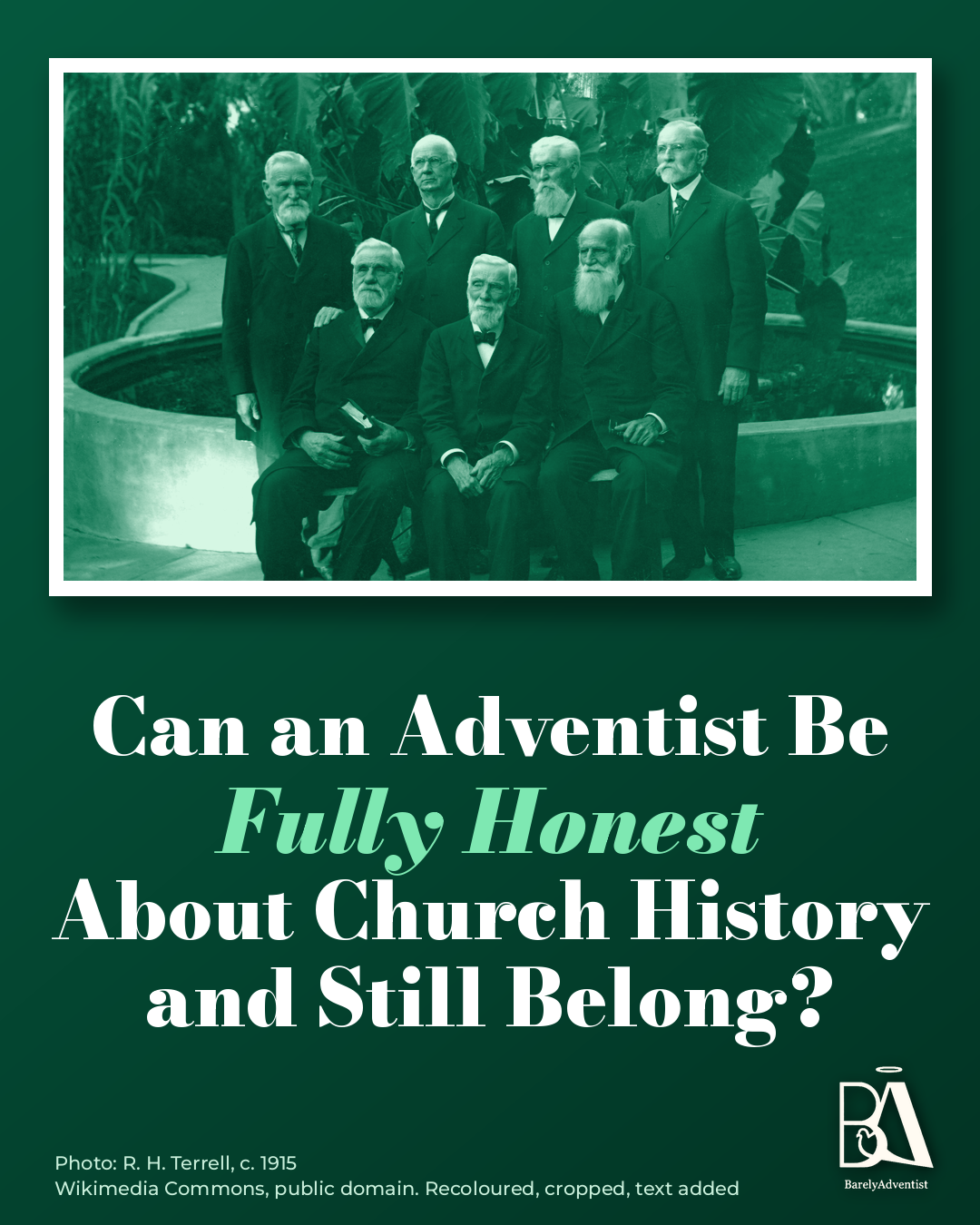
Photo: “Pioneer Adventist ministers” by R. H. Terrell, about 1915, public domain, via Wikimedia Commons. Recoloured, cropped, framed, text added. https://commons.wikimedia.org/wiki/File:Pioneer_Adventist_ministers_(1915)-2.jpg
Head over to Adventist Today for current events, analysis, and opinion on all things Adventist.


