

Roger Dudley of Andrews University spent ten years following 1,523 baptized Adventist teenagers, starting at ages 15 and 16. By the time they were 25 and 26, about a quarter described themselves as enthusiastic members and another quarter as so-so. The remaining half were split between those who had dropped out and those still on the books but not in heart.
That last group is cultural Adventism, and it exists. It is also a minority. Pew Research’s 2014 Religious Landscape Study found that 67 percent of American Adventists attend services at least weekly and 83 percent say religion is very important in their lives. Still, the church’s own 2017-18 Global Church Member Survey reported that over 42 percent of members feel their religious belief does not affect their daily life.
Habits can outlast conviction, and some Adventist habits are worth keeping. A Loma Linda study published in 2001 followed 34,192 California Adventists and found that the men lived 7.3 years longer, and the women 4.4 years longer, than other white Californians. It is entirely possible to keep eating that way, resting on Saturday and turning up for potluck long after belief has grown faint, and some people do.
The local church does not need to expose anyone. Invite them to cook for the fellowship meal. Ask about their story before you ask about their beliefs. Pray for them by name.
Religious leaders once complained about Jesus, “This man receiveth sinners, and eateth with them” (Luke 15:2). He went on eating with them anyway. With Him, the seat at the table came first.
Our patrons make room for honest essays like this. Back us on Patreon here: https://www.patreon.com/barelyadventist/posts/ones-who-never-174854669
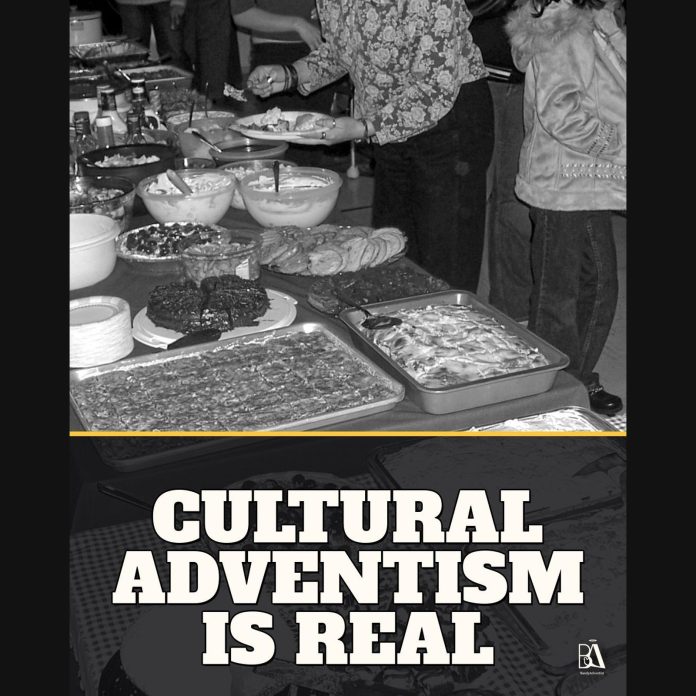
Photo credit: Nehrams2020. CC BY-SA 3.0. via Wikimedia Commons. Cropped, darkened, text added.
Head over to Adventist Today for current events, analysis, and opinion on all things Adventist.

